
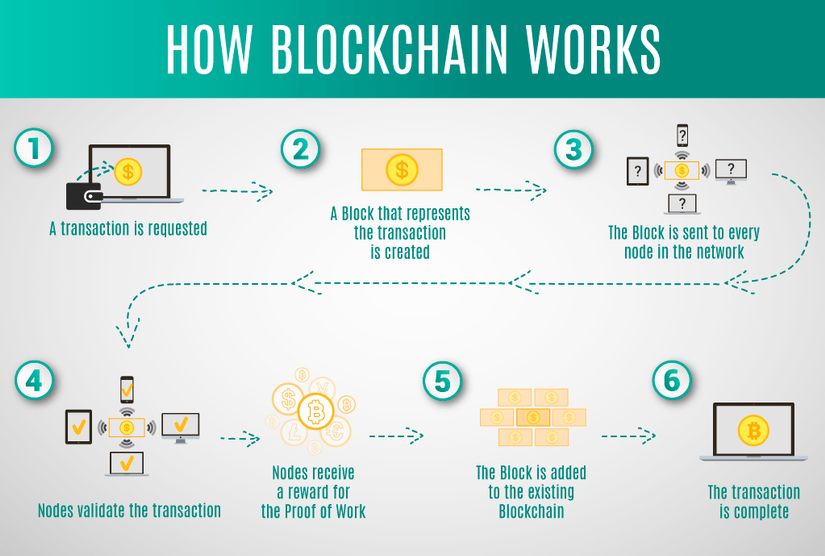
Blockchain, one of the most groundbreaking technologies of the 21st century, has been and is changing the way we approach data storage and online transactions. Best known through cryptocurrencies like Bitcoin, blockchain also has many other applications in various fields.
Below are the basic concepts of blockchain to help you better understand this technology.
1. Blockchain Concept
Blockchain is a distributed ledger, a type of distributed database that stores information in cryptographically linked blocks. Each block contains a number of transaction records, and each new transaction added to this ledger is verified by the network of computer nodes before being added to a new block in the chain.
Suppose you send money to a friend via a banking app. In the case of blockchain, this transaction will be sent to the network of computers (nodes) participating in that blockchain. These computers will check and verify the transaction by solving complex algorithms, and after confirmation, the transaction will be added to the latest block in the chain. Once the transaction is added and the block is sealed, it cannot be altered or deleted, ensuring security and transparency.
2. Security of Blockchain
Blockchain uses advanced encryption to ensure information security. Each new block added to the chain contains a “hash” of the previous block, forming a linked chain. This means that once a block is added to the chain, it cannot be altered without changing all subsequent blocks.
Imagine you are building a tower from dominoes. Each domino represents a block in the blockchain. If you change the information in a domino (block) in the middle of the tower, you would have to change all the dominoes (blocks) above it to keep the tower from falling. This makes it extremely difficult to alter information once it has been recorded in the blockchain, ensuring data integrity.
3. Types of Blockchain
Blockchain can be classified into three main types: public, private, and consortium.
- Public blockchain: allows anyone to participate and conduct transactions. Examples: Bitcoin and Ethereum.
- Private blockchain: controlled by a single organization, allowing only authorized participants. Example: a company’s asset management system.
- Consortium blockchain: a hybrid of public and private, where a group of organizations collectively manage the blockchain.
4. Applications of Blockchain
Beyond cryptocurrency, blockchain is also applied in various other fields such as:
a) Smart contracts: Automatically execute contract terms when conditions are met.
Smart contracts in insurance: When a predefined event in the contract occurs (e.g., flight cancellation), the system will automatically verify the event through pre-programmed data sources and proceed to pay the insurance to the customer without human intervention.
b) Voting system: Enhances transparency and minimizes fraud in the voting process.
Voting system: Citizens can vote remotely without concerns about ballot security. Each vote is recorded transparently and cannot be altered once it is entered into the blockchain.
c) Supply chain management: Monitors and ensures the origin and quality of products from manufacturers to consumers.
Supply chain management: A food manufacturing company can use blockchain to record each step in the food production and distribution process, from farm to table. This not only ensures quality but also enhances consumer trust.
5. Conclusion
Blockchain is opening a new era of information technology, bringing transparency, security, and efficiency across various fields. Despite many challenges that need to be addressed, the potential of blockchain is undeniable, promising significant innovations in the future.
(SMVN Law Firm)