
The rapid proliferation of digital assets, especially those based on blockchain technology, and the significant expansion of new economic activities are raising unprecedented issues regarding standards, asset regulations, financial markets, taxation, and policy planning for many countries. Experts believe that it is necessary to identify challenges and amend and complete the legal system, particularly in the amended Law on Credit Institutions currently being reviewed by the National Assembly, to include additional regulations on the management of digital assets.
Vietnam is among the top 10 countries in the world with the highest percentage of cryptocurrency owners.
Not only including Bitcoin and virtual currencies, digital assets (or digital technology assets) have a much broader scope. Digital assets include digital currencies (virtual currency, electronic money, cryptocurrency…), intangible assets (in-game assets, intellectual property, videos, digital artworks…) and digitized tangible assets (physical artworks, digitized financial assets such as real estate, securities; documents, certificates, equipment, consumer goods like phones, furniture, fashion items…).
With the development of science, technology, and the 4.0 industrial revolution, many new forms have emerged in the digital environment, including the formation of new types of assets commonly referred to as digital assets. Digital assets have experienced rapid growth in recent years. According to research by Boston Consulting Group, it is estimated that by 2030, tokenized assets will account for 10% of global GDP, equivalent to 16.1 trillion USD. In 2022, this figure was at 0.31 trillion USD, accounting for approximately 0.4% of GDP. It is projected that in 2023, it will reach 0.6 trillion USD, accounting for 0.6% of global GDP. This figure is expected to continue rising from 2024, reaching 10 trillion USD, and accounting for 7% of global GDP by 2028. In Vietnam, Blockchain is identified as one of the leading technologies in the list of prioritized technologies for research, development, and application to lead and participate in the 4.0 Revolution.
A research report, quoting information from Digital Assets-Worldwide/Statista Market Forecast at the seminar “Improving Legal Policy on Digital Asset Management” organized by the Planning and Development Research Institute (PDI), under the Vietnam Union of Science and Technology Associations (VUSTA), and the Ministry of Information and Communications, stated that by 2021, there had been more than 2 billion transactions with a total value of 1.4 trillion USD in virtual currency activities. In 2020 alone, 193 billion USD in transactions were conducted through 586 million transactions. Revenue in the digital asset market is projected to reach 56.420 million USD in 2023. The revenue is expected to have a compound annual growth rate (CAGR 2023-2027) of 16.15%, leading to a total projected revenue of 102.700 million USD by 2027.
The average revenue per user in the digital asset market is expected to reach 83.73 USD in 2023. From a global comparison perspective, the United States achieves the highest revenue (27.410 million USD in 2023). In the digital asset market, the number of users is projected to increase to 994.30 million people by 2027. The user penetration rate will be 8.8% in 2023 and is expected to reach 12.5% by 2027.
Vietnam currently ranks 11th with 6.1% of the population and is in the Top 20 countries with the highest cryptocurrency ownership rate in 2021. According to the representative of the Blockchain Association, Vietnam is now in the Top 10 globally in terms of cryptocurrency ownership rates.
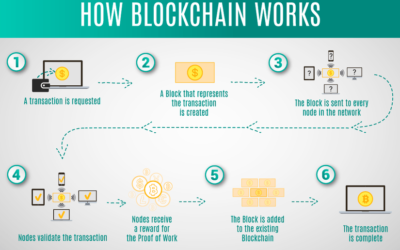
According to Mr. Dang Huy Dong, former Deputy Minister of Planning and Investment, and Director of the Planning and Development Research Institute, the 4.0 revolution is closely associated with the rapid emergence of new products, services, and business models based on the application of technologies such as products, services, and new business models in the fields of Fintech, platform economy, and shared economy. This is posing new challenges that have not been addressed by existing standards, regulations on assets, financial markets, taxation, and management requirements for policy planning in many countries. Experts point out that digital assets are formed on digital technology platforms, with some basic characteristics such as: existing in the form of technical files on electronic environments, being formed through the application of blockchain technology, being authenticated by cryptography, and being adjusted by smart contracts.
Vietnam’s current law has not yet recognized ownership rights for digital assets.
In Vietnam, Blockchain is identified as one of the leading technologies in the list of prioritized technologies for research, development, and application to lead and participate in the 4.0 Revolution. Vietnam’s current law does not recognize ownership rights for digital assets. However, trading and mining activities of digital assets are still actively taking place amid the strong development wave of the 4.0 Revolution. How to manage and create a legal corridor to facilitate this new development still has many differing viewpoints and approaches, while the current legal framework is still under continuous research and completion.
Experts from the Ministry of Information and Communications pointed out: A review of the legal system related to 8 laws and legal documents shows that these documents have not yet clearly and definitively classified and identified the type of “tokenized assets.” There have already been more than 2 billion transactions with a total value of 1.4 trillion USD in virtual currency activities by 2021. In 2020 alone, 193 billion USD in transactions were conducted through 586 million transactions.
Currently, the EU and many countries such as Japan, the US, China, etc., have developed legal policies to manage and define digital assets, but in Vietnam, there are no laws and specific regulations on digital assets, which are still in the process of being developed.
Experts suggest that it is necessary to complete the legal framework, clearly defining the specifics of digital assets to suit the practical development requirements of Vietnam; Recognize virtual money as a new type of asset; Quickly complete the legal framework to soon recognize digital assets as a type of asset with conditions for circulation; Tax digital assets and related activities; Allow and supervise the issuance of digital assets through initial coin offerings (ICOs). In addition, immediately include this issue in the revised Law on Credit Institutions, which is being submitted to the National Assembly for consideration, proposing the establishment and supervision of digital asset trading exchanges, and promoting the application of blockchain technology in digital asset management.
The research team also proposed continuing to complete the model of industrial parks, focusing on research and development centers for Blockchain products, prioritizing products with high value, economic efficiency for the nation, and effectively utilizing national financial resources.
Need to develop a pilot legal framework to promote the application and development of blockchain technology
Experts also recommend building a legal framework to promote the application and development of blockchain technology in the management of virtual assets, tokenized assets, and digital currency. Tokenization is very necessary, but the level of legal regulation on this issue needs to be cautious, ensuring a balance between the goals of encouragement, promoting innovation and creativity, and protecting the interests of organizations, individuals in society, especially consumers. Tokenized assets, tokenized money, and digital currency are the most well-known applications of blockchain technology. These are new issues, along with the applications and products on the blockchain technology platform, leading to the emergence of the need to build a comprehensive legal framework, which can adjust related activities that are still difficult and yet feasible at this time. Therefore, developing a controlled pilot legal framework (Sandbox) in certain areas is an appropriate approach.
Regarding the management of digital assets and tokenized assets, experts from the Ministry of Justice have determined that in essence, tokenized assets reflect a similar value to other traditional assets. Tokenized assets should be considered as assets. To promote the 4.0 revolution in Vietnam, the law must play a role in encouraging, protecting ownership rights for new types of assets that this revolution creates. However, these are very new and difficult issues, so comprehensive solutions have not yet been proposed.
Agreeing with the view that a pilot legal framework for blockchain application in managing digital assets and virtual assets is necessary, the Ministry of Justice believes that Vietnam can approach it by closely monitoring the development of technology and the market while enhancing exchanges, learning from international experiences, and consulting relevant parties (businesses, consumers, etc.) to propose appropriate policy solutions.
Tokenized assets are a new issue not only for Vietnam but also for developed countries, which have not yet established a comprehensive legal framework to regulate these assets. Countries mainly approach this issue based on risk management principles, using pilot legal frameworks (sandboxes) to encourage, promote innovation and creativity, limit risks, and simultaneously institutionalize it in investment, business, securities, commerce laws, and intellectual property rights related to digital assets.
(Hải Yến – quochoi.vn)