Currently, there are quite a few types of virtual currencies and electronic money globally (over 1,000 types), with a trend of increasing prices recently. Meanwhile, the technology behind these currencies is also being explored by businesses, applied, and many countries around the world are considering the use of virtual currencies and electronic money for payment. To integrate internationally and simultaneously reduce risks for investors, the Prime Minister issued Decision No. 1255/QĐ-TTg on August 21, 2017, approving the Project to improve the legal framework for managing and handling virtual currencies and electronic money.
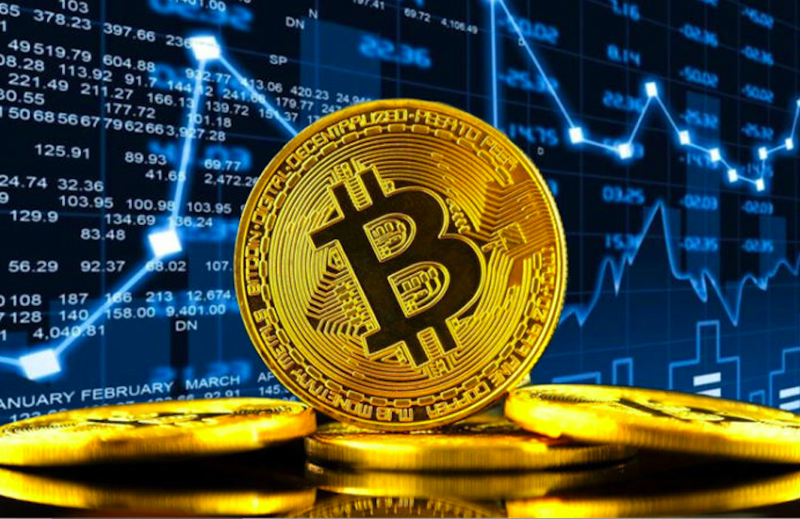
Virtual currencies and electronic money are rapidly increasing in value and diversifying.
Virtual currencies, electronic money, and digital currencies are types of money not issued by any government or central authority. They are created through the process of “mining” using the power of technology. According to Coinmarketcap.com statistics, there are nearly 1,200 different types of virtual currencies and electronic money with a market capitalization of approximately 168 billion USD. Some countries around the world, such as Japan, Russia, and China, have legally recognized virtual currencies and electronic money. On April 1, 2017, Japan passed a law allowing retailers to accept bitcoin as a legal payment method, thereby promoting bitcoin trading activities using the JPY currency. On June 2, 2017, the Chinese government officially banned the withdrawal of funds from bitcoin accounts and allowed the withdrawal of funds from accounts at the largest exchanges in the country.
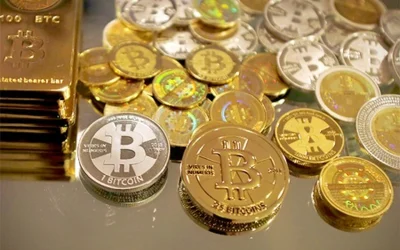
There are 5 most commonly traded virtual currencies and electronic money today. Bitcoin was the first currency created on September 1, 2009, by Satoshi Nakamoto, and it is the most widely used virtual currency in electronic commerce. As of the end of August 2017, 16.5 million bitcoins had been issued (out of a total supply of 21 million to be issued by 2040) with a market capitalization of approximately 76 billion USD, accounting for 45% of the total market capitalization of virtual currencies. The price of bitcoin increased sharply (7.3 times in 8 months) from 968.23 USD/1 bitcoin (early 2017) to 4,630.73 USD (as of August 31, 2017), demonstrating the attractiveness of this currency. China, from a country that banned financial institutions from trading, underwriting, and providing insurance using bitcoin (in 2014), has become a bitcoin hub of the world.
The second most popular virtual currency is Ethereum (ETH). ETH was first launched in 2015 by Vitalik Buterin and was designed with more features than just a digital currency. Many large corporations worldwide are developing various programs such as transaction monitoring, supply chain management, etc., based on ETH, including companies like Toyota, Merck, and Samsung. Currently, the total amount of ETH issued is around 94 million units, with the price as of the end of August 2017 being 379 USD/1 ETH, equivalent to a market capitalization of about 35 billion USD, accounting for 21% of the total market capitalization of virtual currencies. In addition, there are some other popular currencies like bitcoin cash (a branch of bitcoin), ripple, and litecoin, with market capitalizations as of the end of August 2017 being 9 billion USD, 8.6 billion USD, and 3.4 billion USD, respectively.
Virtual currencies and electronic money in Vietnam
Currently, in Vietnam, virtual currencies and electronic money are not legally recognized; however, transactions involving these currencies still take place. To participate in bitcoin mining, players must register for a “bitcoin wallet,” then they can receive free bitcoins through bitcoin giveaway websites, or access bitcoin mining websites to profit. Additionally, according to Dr. Bùi Quang Tín from the Ho Chi Minh City Banking University, in Vietnam, bitcoin can also be traded in a multi-level marketing format, where the introducer will receive a 10% profit share from the new participants. Although it only stops at level 2 instead of building a multi-level marketing network, virtual currency transactions have attracted many participants. However, since this type of currency is not legally recognized, credit institutions are not allowed to use virtual currencies as a form of payment, while organizations and individuals holding or conducting transactions related to this currency are not legally protected.
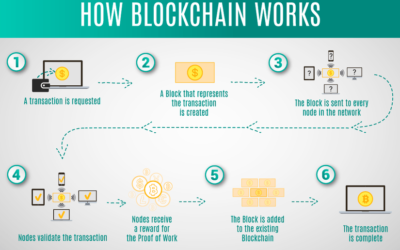
The reasons why virtual currencies and electronic money are so attractive to large investors worldwide, including in Vietnam, are: (i) Investors can benefit from arbitrage when the price of virtual currencies continuously increases due to the scarcity of these currencies; (ii) Virtual currencies run on blockchain technology platforms, which are considered as accounting, auditing applications that record, store, and verify all transactions worldwide. This is an application that large corporations are seeking to apply in their management and monitoring operations.
It can be seen that, despite the continuous increase in the prices of these currencies in recent times, the application of virtual currency technology and electronic money is still attractive to businesses and some countries around the world to formalize virtual currencies as a payment method. However, virtual money still carries many risks as prices are not determined by internal value but depend on supply and demand, leading to virtual currency transactions experiencing several bubbles like those at the end of 2011 and early 2014. Therefore, without the management of government authorities, virtual currency trading will pose many risks for investors.
To address the risks of virtual currencies, electronic money, and virtual assets, the Prime Minister issued Decision No. 1255/QD-TTg on August 21, 2017, approving the project to improve the legal framework for managing, handling virtual assets, electronic money, and virtual currencies to protect the legal rights and interests of both domestic and foreign investors in Vietnam, and to limit, prevent, and control related risks. According to Decision No. 1255/QD-TTg, the project will be developed with the goal of thoroughly researching, fully recognizing, and accurately identifying the nature of virtual assets, electronic money, and virtual currencies according to international experience and practical implementation in Vietnam; the relationship (between virtual currencies, virtual assets) with real assets, physical money; the reality of issuing, using virtual assets, electronic money, virtual currencies and the impact on the legal system.
The review and assessment of the legal status of virtual assets, electronic money, and virtual currencies in Vietnam to address any issues and inconsistencies will be led by the Ministry of Justice. The Ministry of Justice will also study and survey international experience and laws related to virtual currencies and virtual assets from countries such as the USA, Europe, Japan, and others. In addition, they will hold seminars and discussions to identify and clarify the roles of virtual assets and virtual currencies and propose directions for improving Vietnamese law, to be submitted to the Prime Minister in August 2018. The Ministry of Justice is also the leading agency in preparing a proposal for the development of legal documents on virtual assets and virtual currencies, expected to be submitted in December 2018. They will also research and propose measures to prevent and handle administrative violations related to virtual assets and virtual currencies, expected in September 2019.
In addition, the State Bank of Vietnam is the lead agency in researching and proposing amendments and supplements to new legal documents on electronic money and virtual currencies, to be submitted to the Government in August 2018. The Ministry of Public Security will conduct research and propose measures to prevent and handle criminal offenses such as fraud, money laundering, terrorist financing, and other crimes related to virtual assets and virtual currencies, expected in September 2019. Regarding tax regulations, the Ministry of Finance will study and propose amendments, supplements, and issuance of legal documents on taxation related to virtual assets and virtual currencies, expected in June 2019.
The proposal for the development, amendment, and supplementation of laws related to virtual currencies and virtual assets will be completed by December 2020. Thus, in about 3 years, the management of virtual currencies, electronic money, and virtual assets will gradually be perfected. The approval of the project to improve the legal framework for managing virtual currencies, electronic money, and virtual assets shows the trend of integrating international practices into the use and management of these entities in Vietnam, thereby minimizing risks for investors and other subjects involved in virtual currencies, electronic money, and virtual assets.
(Thanh Thủy – mof.gov.vn)